Woodland Interceptor Sanitary Sewer Rehabilitation
Updated Timeline:
August:
Final measurements of pipes and manholes
Temporary diversion pipe set-up
September:
Continued temporary diversion pipe set-up
Begin installation of CIPP liner and manhole rehabilitation
Original Post:
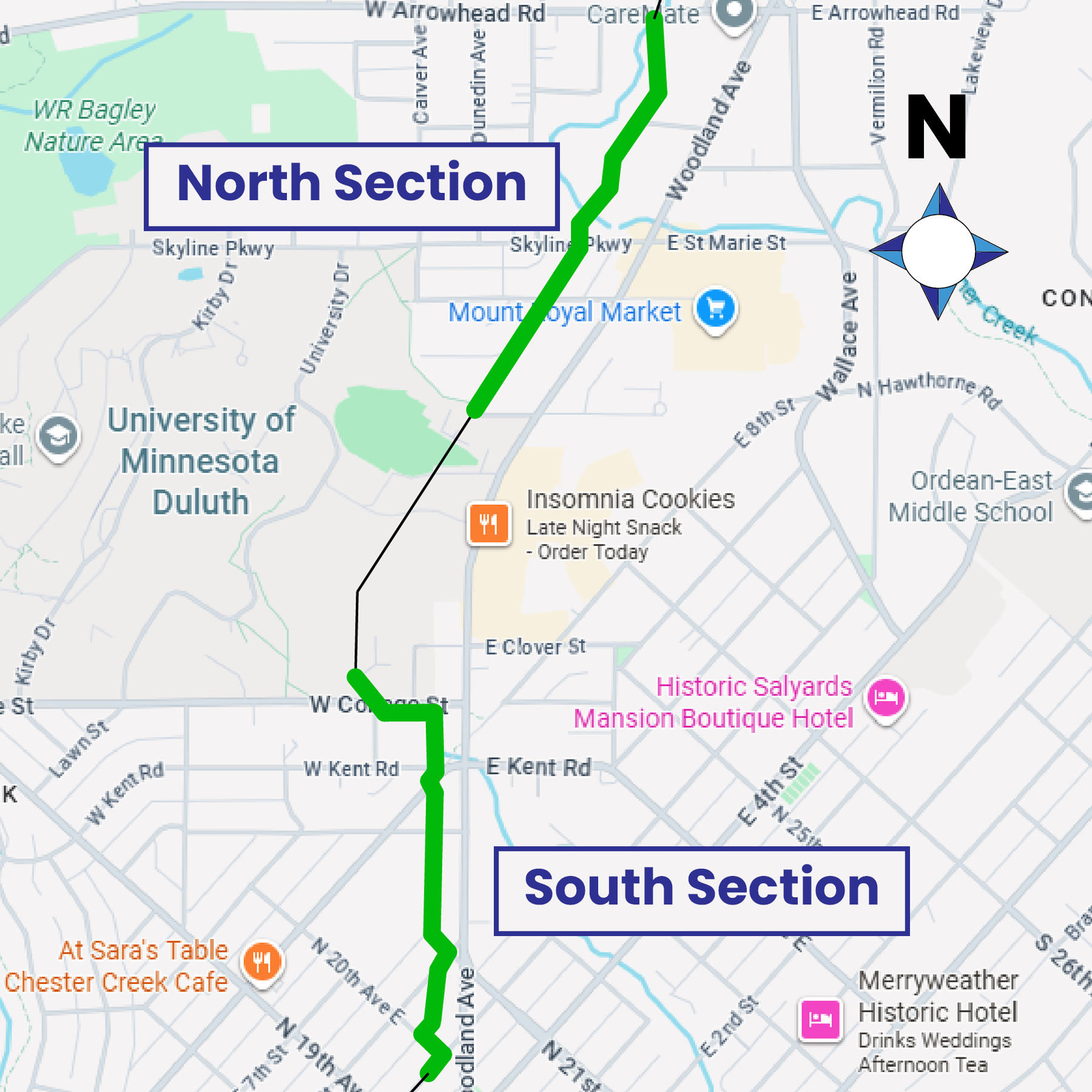
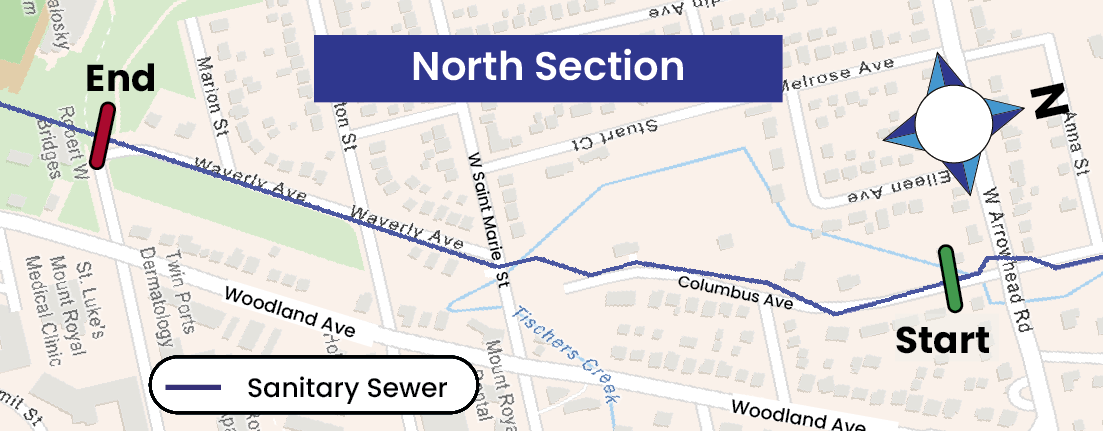
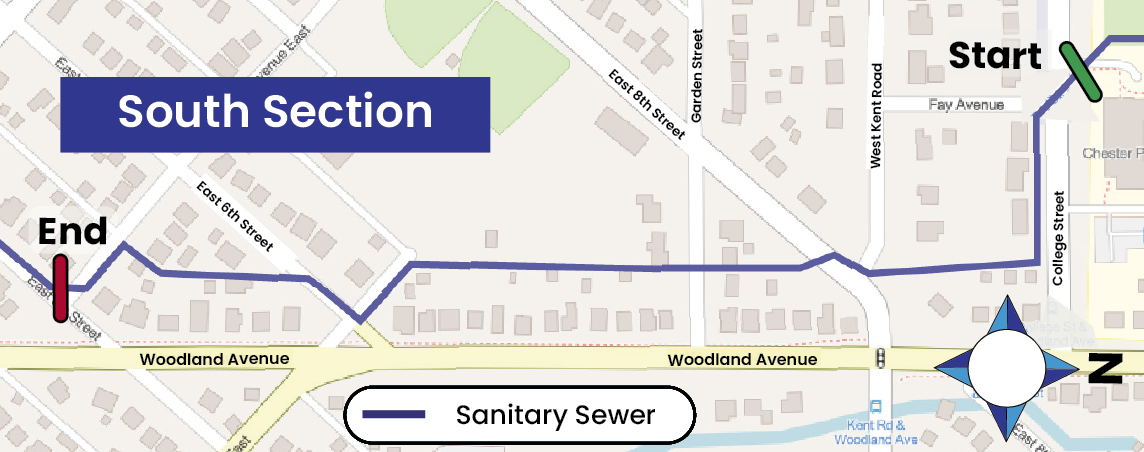
Starting in late July 2026, Resource Renew, the brand of WLSSD, will begin a project to rehabilitate the sanitary sewer line near Woodland Avenue and the UMD campus. The project includes two sections on either side of UMD. The north section spans from Arrowhead Road to Elizabeth Street and the south section spans from College Street to around 18th Avenue East.
Map showing both North and South Sections
Map of North Section
Map of South Section
Timeline Details: timeline will be updated throughout the project as construction is underway
June 2026 – Project Bid awarded to Insituform Technologies LLC
Late July 2026 – Project Start
November 2026 – Substantial completion
Overview
Our community operates two distinct sewer systems: the sanitary sewer and the storm sewer. The sanitary sewer transports wastewater from homes and businesses to the water resource recovery facility, where it is treated and safely released into the St. Louis River. In contrast, the storm sewer collects rainwater and runoff, directing it into nearby streams, rivers, and lakes. While these systems are designed to remain separate, clean stormwater occasionally infiltrates the sanitary sewer system.
Sanitary Sewer Maintenance
Resource Renew owns and maintains approximately 75 miles of sanitary sewer interceptor pipes. These large underground pipes collect wastewater from municipal sewer systems, which connect to homes and businesses throughout the region.
Over time, sewer pipes can deteriorate due to shifting soil, tree root intrusion, and corrosion. Damaged pipes can allow excess groundwater to enter the system, increasing the amount of water that must be conveyed and treated.
Cured-in-Place Pipe (CIPP) Rehabilitation
Replacing underground sewer pipes often requires extensive excavation that can disrupt roads, sidewalks, and private property. To minimize these impacts, Resource Renew uses Cured-in-Place Pipe (CIPP) technology to rehabilitate existing pipes from the inside.
CIPP creates a new pipe within the existing pipe without the need for excavation. This trenchless method extends the life of sewer infrastructure while reducing construction impacts, shortening project timelines, and lowering costs compared to traditional pipe replacement.
What Is CIPP?
CIPP is a trenchless method of repairing sewer pipes from the inside. Instead of replacing the pipe entirely, this process involves creating a new pipe within the existing one.
Here’s how the process works:
- Inspection and Cleaning: Crews use cameras to inspect the old pipe and clean out any debris.
- Insertion of the Liner: A flexible liner coated with resin is inserted into the pipe via manholes.
- Curing: Heat, steam, or ultraviolet (UV) light is applied to cure the resin, creating a hard, durable pipe inside the existing one.
This “pipe within a pipe” approach reinforces the sewer line, restores its function, and extends its lifespan by several decades.
What does the CIPP installation look like?
What to Expect During CIPP Work
Although CIPP minimizes disruption, there are still some noticeable impacts:
- Construction Activity
- Trucks and equipment will be stationed near manholes or along the street.
- Workers will be active in these areas during the day.
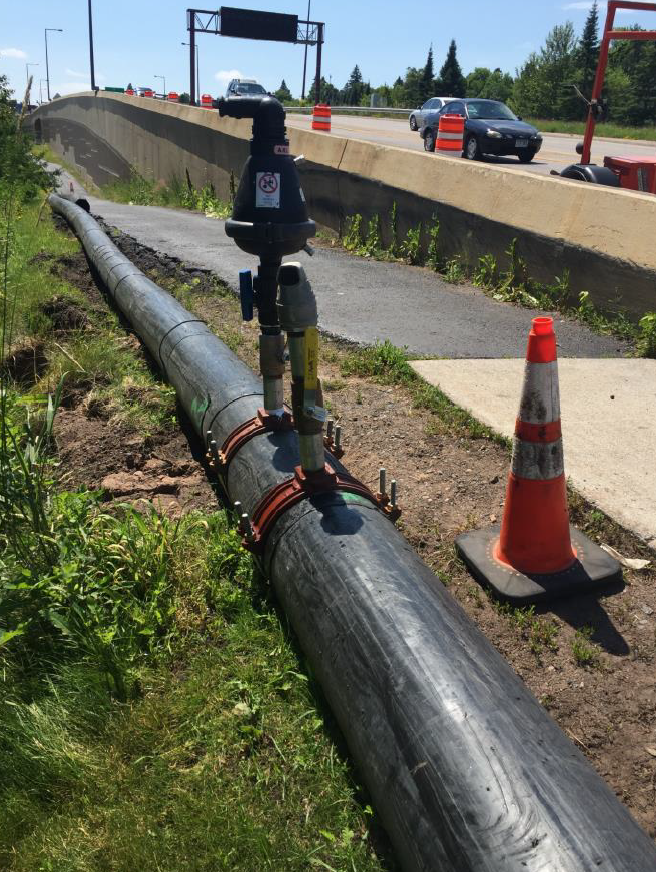
- Temporary Diversion Pipe
- Wastewater from homes and businesses will be diverted through a temporary, above-ground pipe running along the sidewalk.
- This pipe will temporarily cross driveways in the project area. Ramps will be installed to allow vehicles to access driveways safely.
- Traffic and Parking Changes
- Temporary lane closures and parking restrictions may occur. Signs will indicate alternative parking options.
- Detours will occur and will be marked.
- Odors
- During the curing process, you may notice a plastic or glue-like smell. This comes from a material called styrene in the resin.
- While the odor isn’t harmful in small amounts, closing your windows and doors can help keep it out.
- Ensuring your drains and traps are full of water can prevent odor from getting into your home. Running water for 15–30 seconds every few weeks is usually enough to refill the trap.
- Noise
- Equipment like generators, air compressors, and water pumps may generate noise. Crews will attempt to minimize disturbances.
- Night work will be required during liner installation and flow diversion pumping. Pumps will be equipped with noise attenuation, however they will need to run during all times.
- Temporary Sewer Restrictions
- Some homes may need to limit sewer use briefly during the work. If this applies to your property, you’ll be notified in advance. Most homes will not be directly impacted, however a handful of homes along the sanitary sewer in the North Section will be impacted.
Project Timeline
The rehabilitation project will begin in July 2026 and is expected to conclude in November 2026. While a bypass pipe will remain in place for most of the project, the actual CIPP installation typically takes just one or two days per section of pipe. The set-up, inspection, and clean up will take a significant amount of time. Once the work is completed, crews will restore any affected landscaping or infrastructure.
Why Is This Project Important?
CIPP is a cost-effective and environmentally friendly way to maintain the integrity of our sewer system. By rehabilitating pipes without excavation, this method avoids major disruptions, preserves neighborhoods, and ensures our sewer system functions reliably for decades to come.
What will it look like?
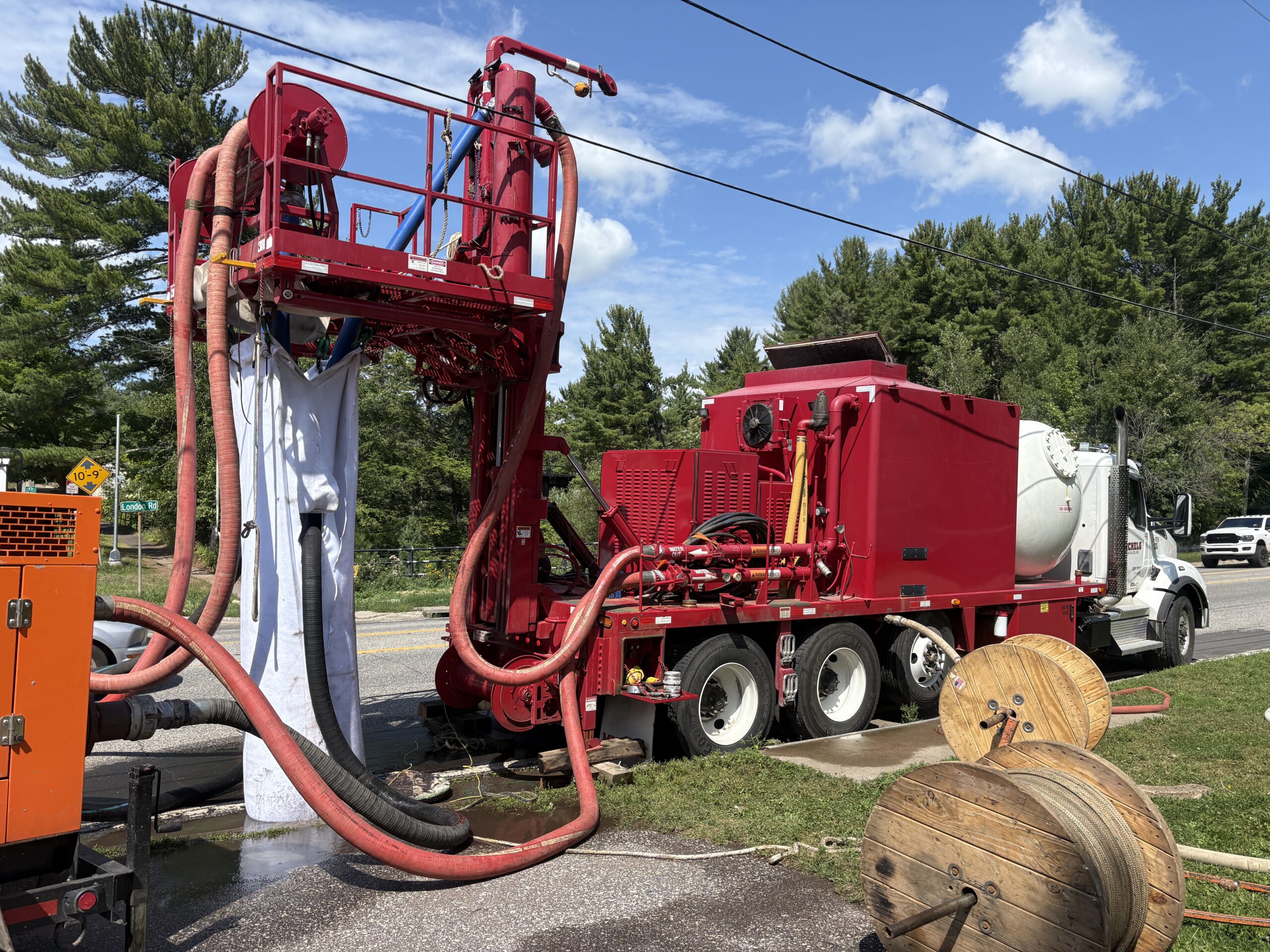
Below are some images from past CIPP projects.
Installation and curing of the CIPP liner from 2025 project:
Bypass pipe from a 2017 project:
*Note the pictured temporary diversion pipe is larger than the bypass pipe required for the 2026 project